
Hip Fractures
A broken hip hurts. Once you are medically stable, surgery is usually done soon so you can get moving again — and that early mobilization is one of the most important parts of getting better.
Call 520-881-1394 Physical therapy locations Hip Fracture Post-Op Instructions (PDF)Overview
A hip fracture is a break in the upper part of the femur. These injuries most often affect older adults whose bones have been weakened by osteoporosis. In younger people, hip fractures usually come from major trauma — a fall from height or a car or motorcycle accident.
Each year, more than 300,000 people in the United States break a hip. Most are adults aged 65 and older who fall at home or in the community.
Hip fractures cause significant pain. Quick treatment and early mobilization — getting you moving again — help avoid complications like pressure sores, blood clots, pneumonia, and confusion in older patients.
For those reasons, surgery is typically performed as soon as you are medically stable. The goal is to relieve pain and get you upright safely.
Arthritis care and planned total hip replacement are on the total hip replacement page. This page is for a broken hip.
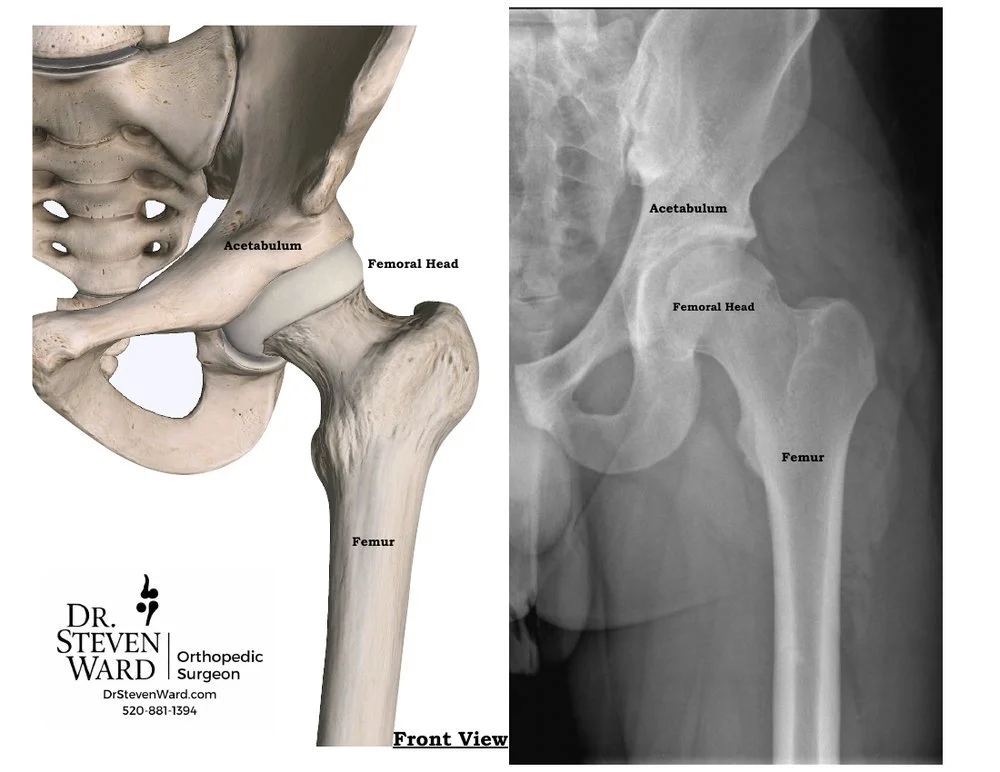
Anatomy of the hip
The hip is a ball-and-socket joint. The “ball” is the rounded head of the femur. The “socket” is the acetabulum, a cup-shaped part of the pelvis that holds the femoral head.
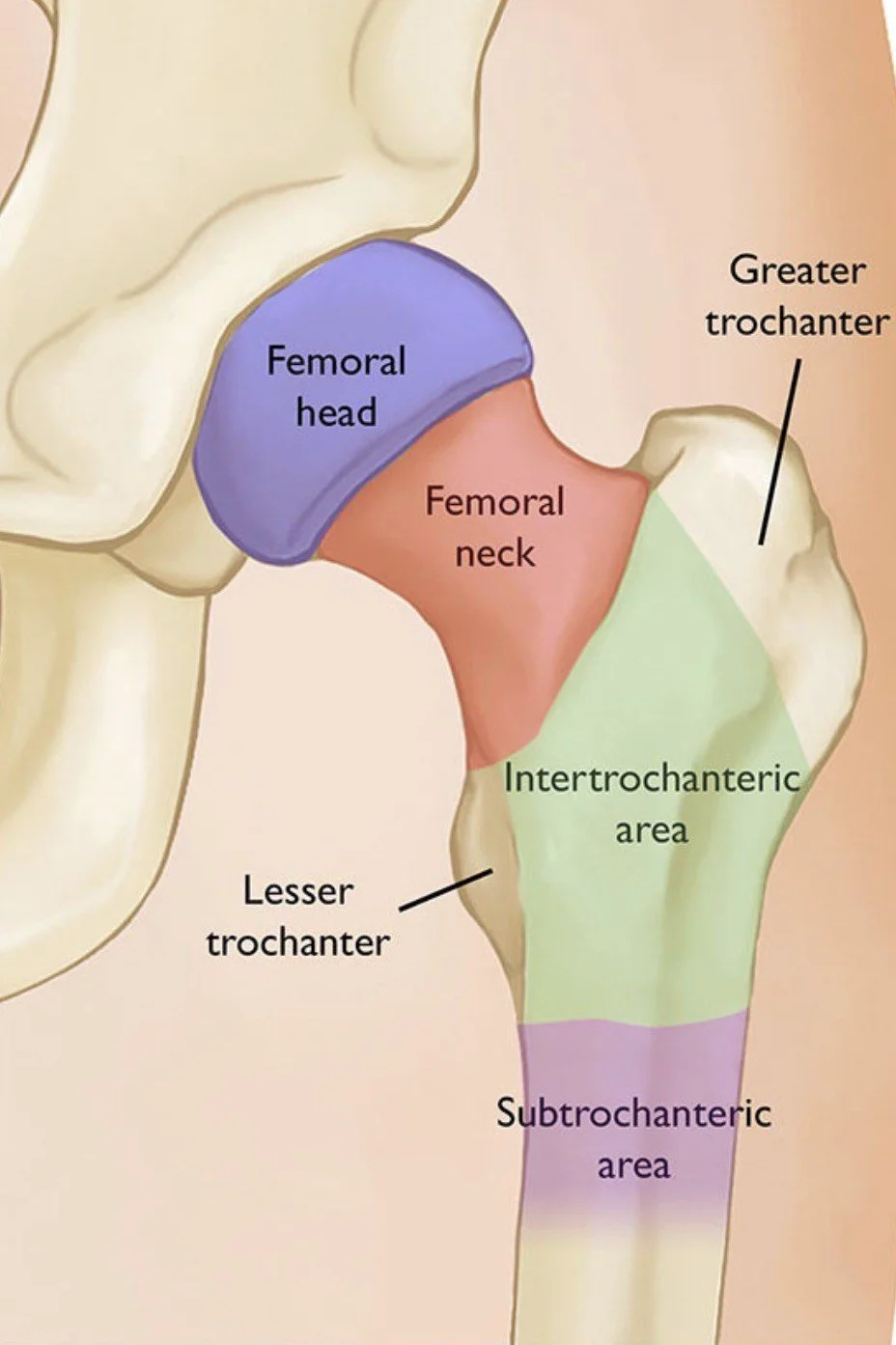
Hip fractures usually involve the upper femur — the neck, the area between the trochanters, or just below. Fractures of the acetabulum or pelvis are separate injuries and are discussed in other resources.
- Femoral head — the ball that sits in the socket
- Femoral neck — the narrow section just below the head
- Intertrochanteric region — between the greater and lesser trochanters
- Subtrochanteric region — upper shaft, just below the trochanters
Types of hip fractures
The most common patterns are femoral neck and intertrochanteric. Location decides treatment: neck fractures are treated with hip replacement; intertrochanteric fractures are fixed with the Stryker Gamma 4 nail.
Femoral neck
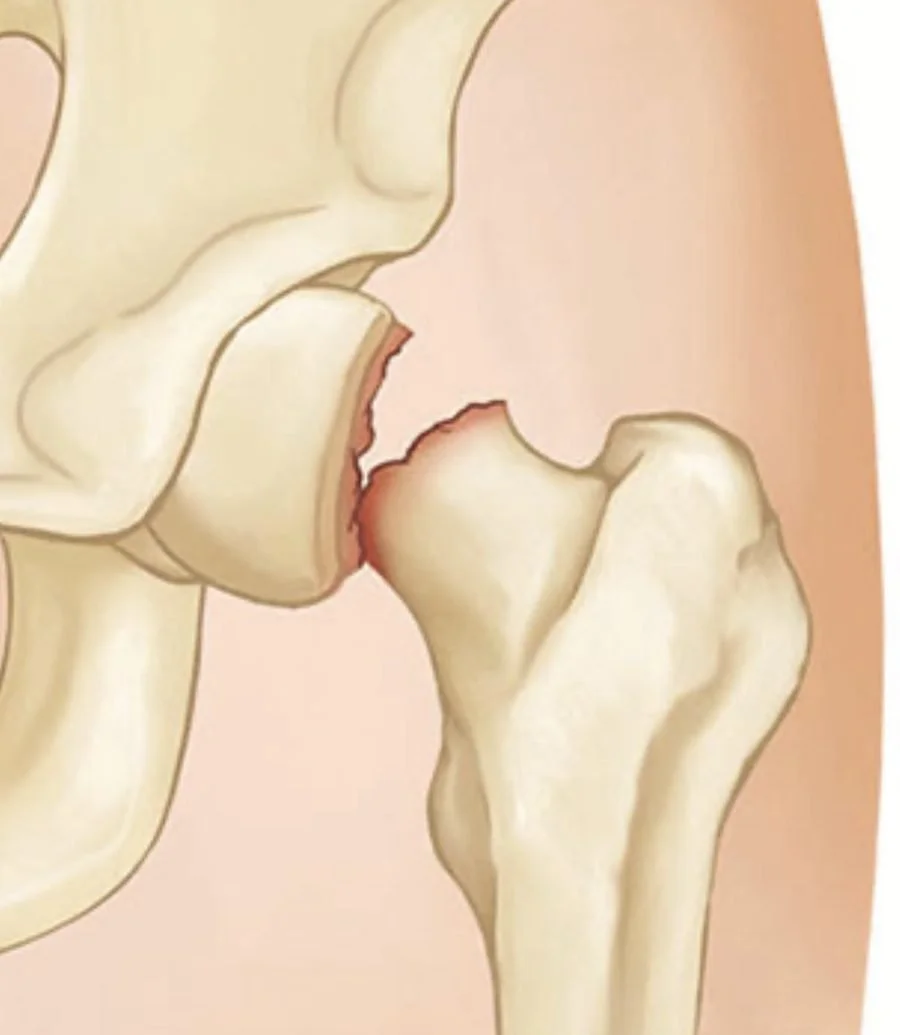
A break in the narrow section just below the femoral head. When the pieces are displaced, blood supply to the head is often at risk. Dr. Ward treats these with a partial hip replacement for older, less active patients or a total hip replacement for active patients.
Intertrochanteric
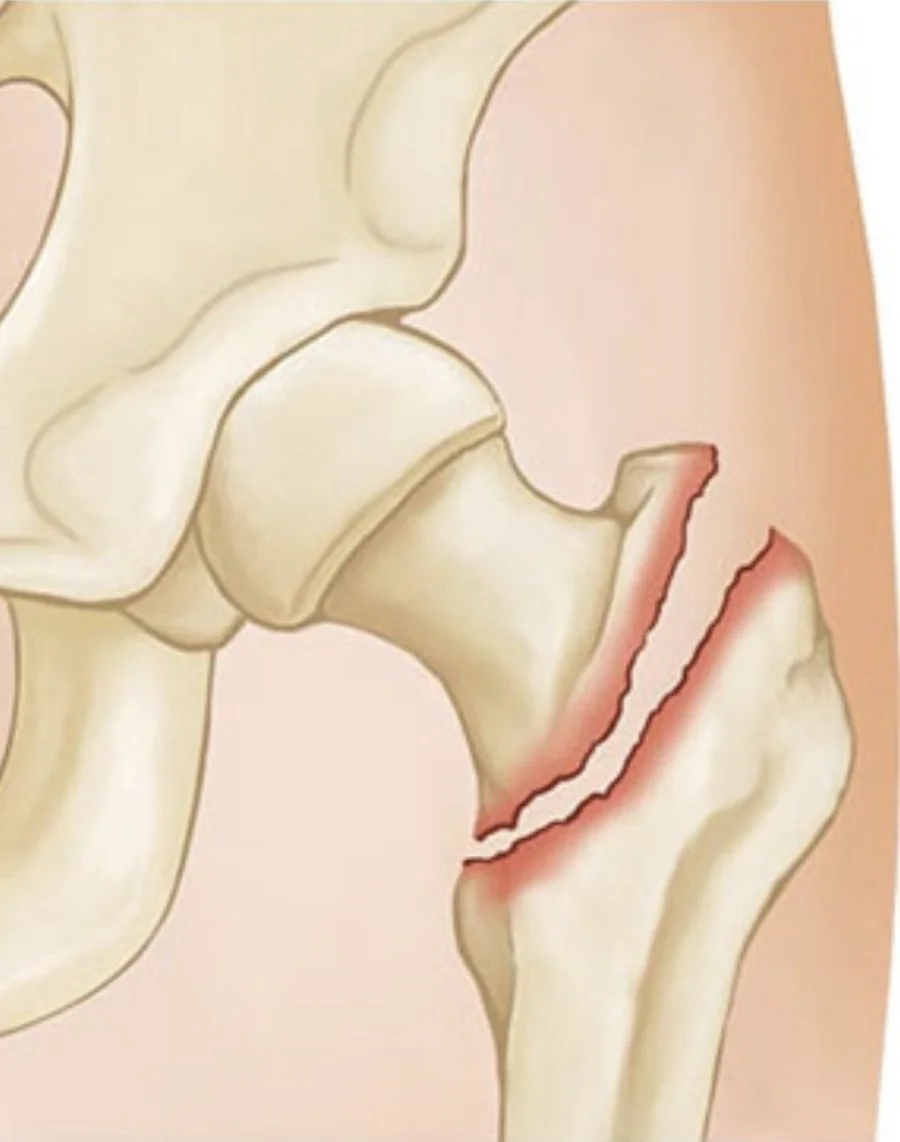
A break between the greater and lesser trochanters. The head’s blood supply is usually preserved. These are fixed with the Stryker Gamma 4 nail so you can bear weight and move early.
Other patterns
- Greater trochanter — often stable; may heal without surgery if imaging rules out extension into the intertrochanteric zone
- Subtrochanteric — also treated with an intramedullary nail
- Femoral head — uncommon; usually high-energy trauma
Causes, symptoms, and diagnosis
Causes
Most hip fractures in older adults come from a low-energy fall on osteoporotic bone. Sometimes the bone breaks during normal standing or walking — “the break happens before the fall” — especially at the femoral neck.
In younger people, major trauma is the usual cause. Stress fractures can also develop in runners or military trainees. Subtrochanteric stress fractures are sometimes linked to long-term use of certain osteoporosis medications.
Symptoms
- Sudden, severe pain in the groin or upper thigh
- Inability to stand, bear weight, or move the leg above the knee in most cases
- The injured leg often looks shorter and rotated outward
- Bruising on the side of the hip or thigh
- Some nondisplaced fractures still allow limited weight-bearing, though it hurts
- Stress fractures may cause gradually worsening pain rather than a sudden break
Diagnosis
Evaluation usually starts in the emergency room: history, exam (sensation, movement, blood flow), and imaging.
- X-rays — the primary test; most fractures show on standard views
- CT — more detail when X-rays are unclear or to plan surgery
- MRI — occasionally needed for subtle or stress fractures
Treatment overview
Almost all hip fractures need surgery to relieve pain and allow early movement. Surgery is ideally within 24–48 hours once you are medically optimized. The exact operation depends on where the break is, whether the pieces are displaced, your age, and your overall health.
Femoral neck
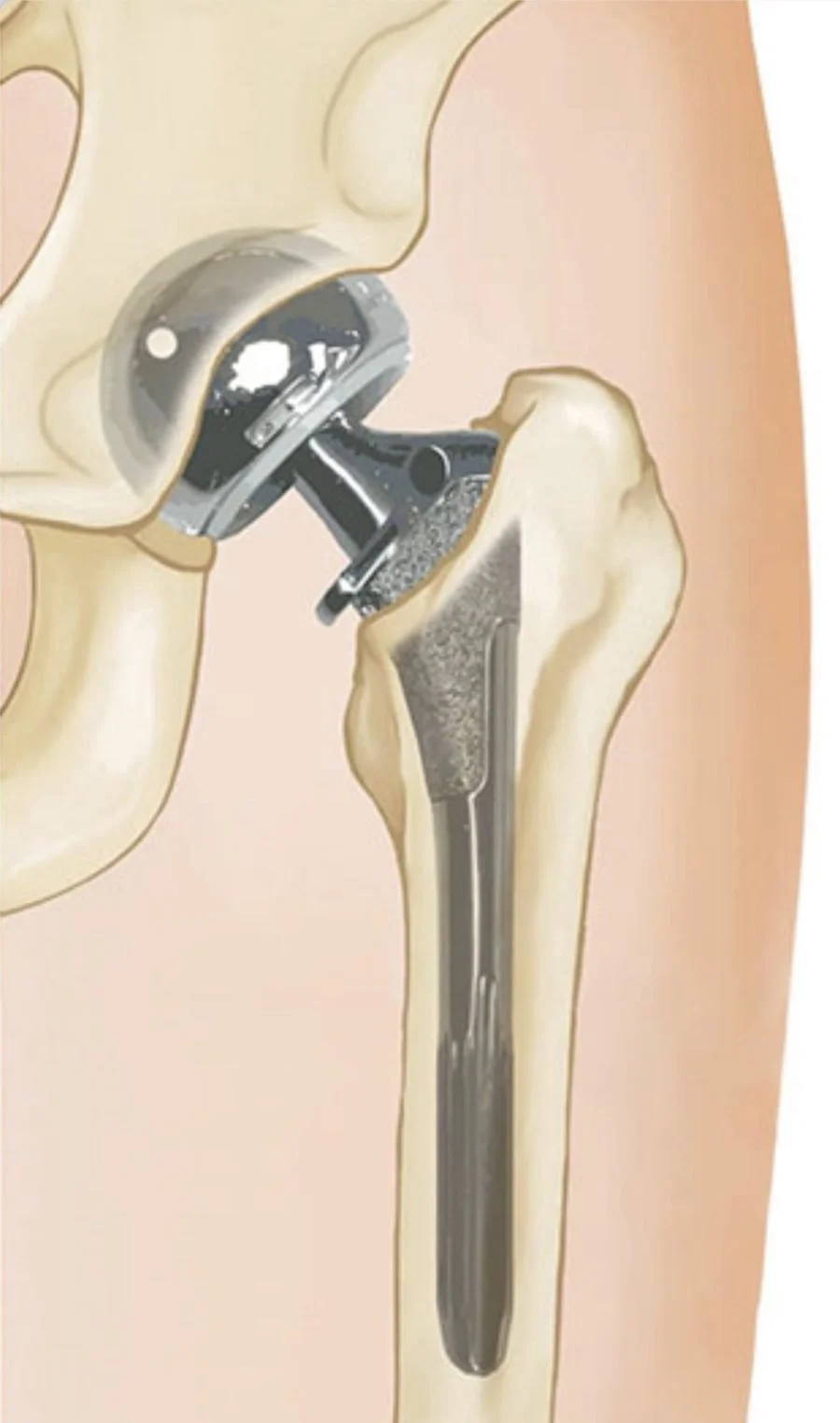
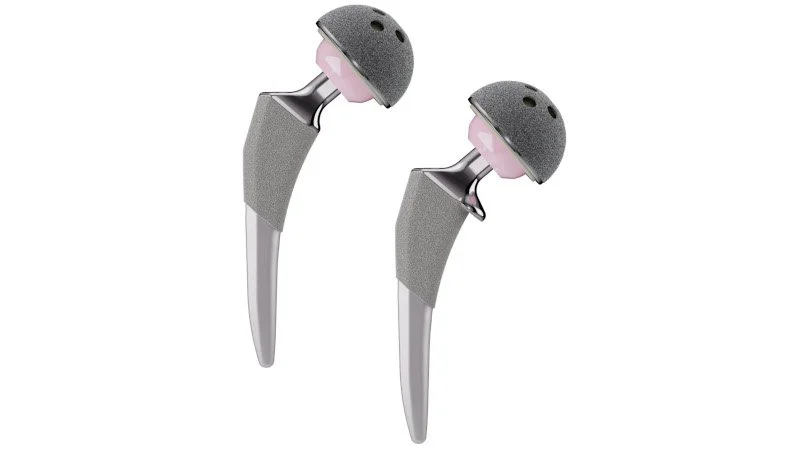
Partial hip replacement (hemiarthroplasty) for older, less active patients or total hip replacement for active patients, with a DePuy Actis stem — because the head’s blood supply may already be compromised.
Intertrochanteric
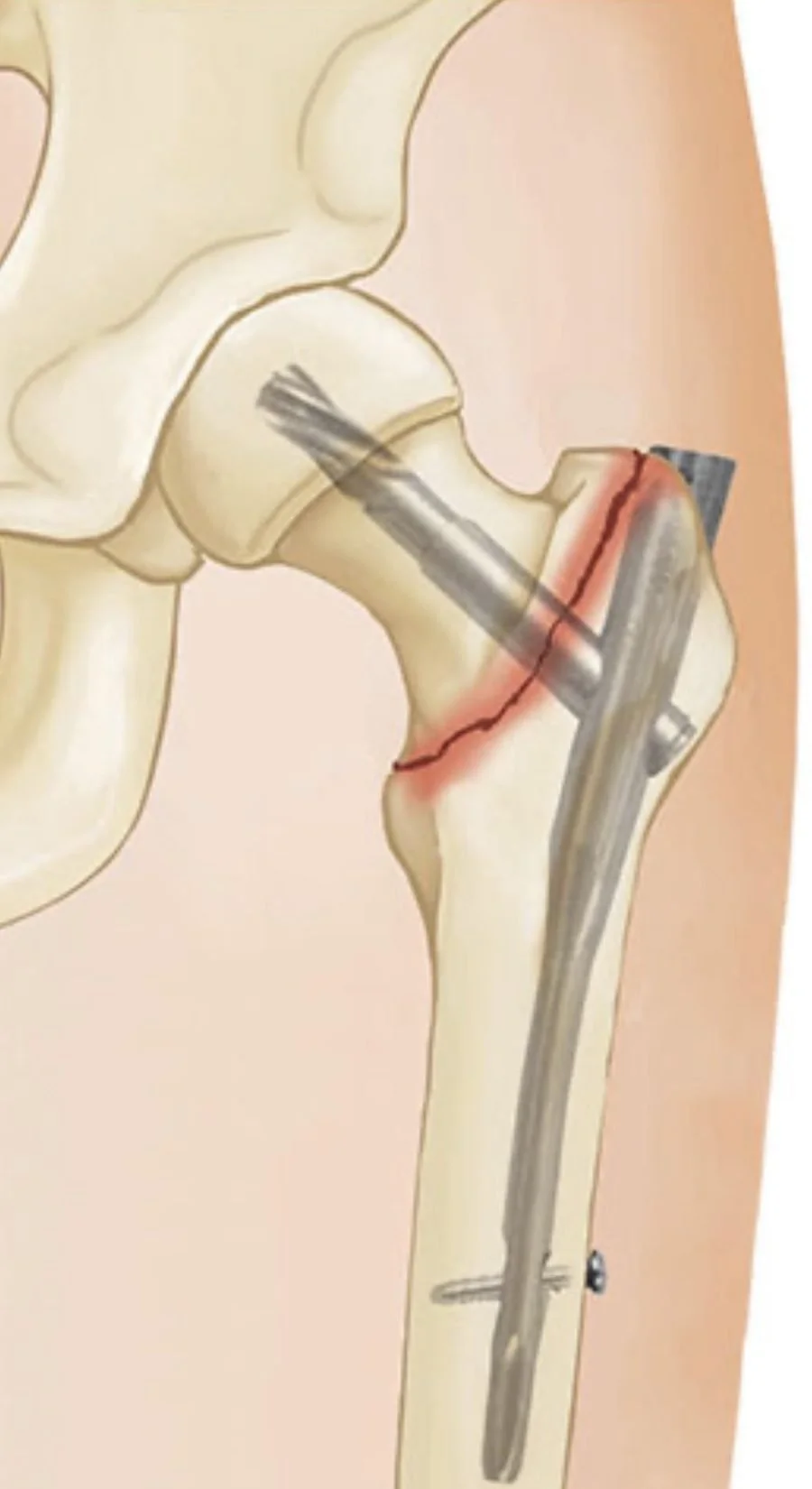
Intertrochanteric fractures are fixed with the Stryker Gamma 4 nail for strong stability and early weight-bearing.
Femoral neck fractures — replacement with Actis
When the neck breaks and the pieces shift, blood flow to the femoral head is often disrupted. Rather than trying to put the head back and wait for it to heal, Dr. Ward treats these fractures with a hip replacement.
Why replacement?
Displaced femoral neck fractures put the head at risk for avascular necrosis (bone death from lost blood supply). For older, less active patients, a hemiarthroplasty (partial hip replacement) replaces the ball while keeping the native socket.
For active patients, Dr. Ward uses a total hip replacement (ball and socket) for better function and less residual pain.
Hemiarthroplasty
The femoral head is removed and replaced with a metal ball on a stem seated in the femur. The socket (acetabulum) is left alone. This is a common, durable choice for older, less active patients after a femoral neck fracture.
Total hip for fracture
Both the ball and the socket are replaced. Dr. Ward uses the DePuy Actis stem. This is used for active patients who can benefit from a full bearing surface.
Elective arthritis replacement is a planned operation on a worn joint — not the same pathway as fracture care. See total hip replacement for that distinction.
Intertrochanteric fractures — Gamma 4 nail
These breaks sit below the neck, between the trochanters. The head’s blood supply is usually intact, so the goal is strong fixation that lets you stand and walk early — not replacement.
Stryker Gamma 4 intramedullary nail
Dr. Ward fixes intertrochanteric fractures with the Stryker Gamma 4 nail. A rod is placed down the canal of the femur, with a lag screw into the femoral head/neck region, to hold the fracture while bone heals.
The nail shares load with the bone, provides strong stability, and supports early weight-bearing as directed. That early mobilization is a major reason surgery is prioritized once you are medically ready.
What to expect
- Fixation of your own bone rather than a joint replacement
- Stability designed for early mobilization with therapy
- Weight-bearing instructions tailored to your fracture and bone quality
- Follow-up X-rays to confirm healing over the coming weeks
Dr. Ward treats these fractures with the Stryker Gamma 4 nail.
Other fracture patterns
Greater trochanter
Isolated fractures here are often stable and can heal with protected weight-bearing using a walker or crutches. CT may be used to make sure the break does not extend into the intertrochanteric region.
Subtrochanteric
These breaks sit just below the trochanters in the upper shaft. They are also treated with an intramedullary nail for stability, often with additional interlocking screws.
Femoral head
Uncommon. Usually from high-energy trauma. Treatment is individualized and may involve fixation or replacement depending on the fragments and the socket.
After surgery — recovery
Most patients start physical therapy the day after surgery. Early movement helps prevent complications and improves outcomes.
Where you go next
You may go home with home health therapy or to a short-term rehabilitation facility, depending on your mobility and support at home. Hip fractures in older adults can reduce independence for a while — thorough rehab is essential.
Medical care after surgery
- Brief antibiotics to lower infection risk
- Blood thinners to reduce clot risk
- Pain managed with a combination of medicines — opioids used sparingly and for the shortest time needed, plus acetaminophen and anti-inflammatories when appropriate
- Medical specialists help manage other health conditions as needed
Physical therapy
Schedule PT to start right after surgery. Plan on 3–6 months of therapy. Good pain control around sessions matters — take medication beforehand so pain does not limit you. Home exercises between visits are important.
Physical therapy locations near you.
Post-op instructions
These details match Dr. Ward’s hip fracture post-operative packet. Write down questions for your next visit.
Wound care
- Leave the dressing in place for seven days, then remove it and leave the incision open to air
- If there is still drainage, keep it covered until dry; change every other day
- Drainage past seven days is not uncommon — keeping it clean is the priority
- You may shower when you go home; keep the dressing dry (a few drops are okay; do not soak)
- After the dressing is off and the incision is dry, let water lightly run over it and pat dry
- Do not soak or submerge the incision for the first 6 weeks
- No lotions or creams on the incision until six weeks; vitamin E creams may help soften scar after that
Pain plan
- Medicine was injected in the hip during surgery for about 2–3 days of relief
- Stay ahead of pain — it is hard to catch up once you fall behind
- Start oral pain medicine as the block wears off
- Compression stockings are optional; they can reduce swelling. Skip or loosen them if the top band is too tight
Medications
- Tylenol — 2 tablets of 325 mg every 6 hours, whether or not you hurt, to flatten the pain curve
- Anti-inflammatory — take if you can; helps swelling and pain
- Oxycodone / Norco — 1–2 tablets of 5 mg as needed at peak pain; stay ahead the first 3 days, then taper
- Resume home medicines as before unless told otherwise; do not mix with other sedatives beyond what was prescribed
Diet
Resume your regular diet. Increase fiber and drink plenty of fluids to prevent constipation from anesthesia and narcotics. Multivitamins are fine; avoid other supplements unless cleared. Do not drink alcohol while taking pain medication.
Sleep
You may sleep on your back or either side. If you sleep on your side, put a pillow between your legs so they do not cross. Avoid excessive bending at the waist.
Follow-up
You should have an appointment with Dr. Ward about 10–14 days after surgery. If one is not scheduled, call the clinic: 520-881-1394.
General questions: call La Cholla at 520-881-1394. Allow 24 hours for medication refill requests.
The internet is mixed. Dr. Ward recommends OrthoInfo.org (American Academy of Orthopaedic Surgeons) as a primary source for pathology, surgery, and rehabilitation guidance.
Common questions
Plain answers for patients and families. If something still does not make sense, call the office — you are not wasting anyone’s time.
How soon will I have surgery?
Once you are medically stable, surgery is often within 24–48 hours. The timing depends on medical clearance, hospital resources, and the fracture pattern. Early surgery supports earlier mobilization.
Will I get a partial hip or a full hip?
For femoral neck fractures, Dr. Ward uses a hemiarthroplasty (partial hip replacement) for older, less active patients and a total hip replacement for active patients. Dr. Ward uses the DePuy Actis stem when replacement is indicated. Intertrochanteric fractures are fixed with the Stryker Gamma 4 nail rather than replaced.
What is the Gamma 4?
The Stryker Gamma 4 is the intramedullary nail used to fix intertrochanteric (and some related) fractures. It sits inside the femur and holds the bone while it heals, allowing early weight-bearing as directed.
How long do I leave the dressing on?
Leave it for seven days, then remove it if the incision is dry. If there is still drainage, keep it covered and change every other day until dry. Do not soak the incision for six weeks.
How long is physical therapy?
Plan on 3–6 months. Therapy often starts the day after surgery. Home exercises between sessions matter. See our PT locations page for nearby clinics.
When is my follow-up visit?
About 10–14 days after surgery. If you do not have an appointment scheduled, or have questions before that visit, call 520-881-1394.
Is this the same as elective total hip replacement?
No. Fracture care is urgent treatment of a broken bone. Elective total hip is a planned operation for arthritis. Some fracture patients do receive a total hip, but the pathway and urgency differ. See total hip replacement for arthritis care.
Where can I read more that I can trust?
Dr. Ward recommends OrthoInfo.org from the American Academy of Orthopaedic Surgeons for pathology, surgery, and rehab information.
Related resources
Helpful next steps after hip fracture surgery.
Hip Fracture Post-Op Instructions (PDF) Partial Hip Replacement Post-Op Instructions (PDF) Hip post-op Physical therapy locations Total hip replacement OrthoInfo.org About Surgical servicesQuestions or follow-up
Call 520-881-1394 and we will find a time that works.
Call 520-881-1394